

Let me tell you something that most GABRYLLY reviews do not cover: the chair feels different at month four than it did at month one. Not bad, necessarily. Just different in ways that matter if you are planning to sit in it for years, not weeks. I have been in the GABRYLLY high-back mesh chair long enough now to have opinions that go past the unboxing experience, and there are a handful of things I genuinely wish someone had told me before I ordered. This review is those things.
If you want the full long-term daily-use breakdown, the other review on this site covers that ground in detail. What I want to do here is address the specific questions buyers ask after they have read the glowing summaries and are still not sure whether to click the buy button. Things like: does the wide seat help or hurt? What happens to the flip arms after real use? Is the headrest actually useful, or does it just look useful in photos? And what does the seat cushion feel like once it has broken in? I will give you straight answers.
The Quick Verdict
A well-priced ergonomic chair that earns its keep on lumbar support and tilt quality, but the seat cushion softens on heavier users and the headrest is more decoration than function during active work.
Amazon Check Today's Price →Tired of standing up at 3 PM just to stop the lower-back ache? The GABRYLLY is worth a serious look.
Over 14,000 buyers on Amazon, 4.4 stars, and a chair that addresses the lumbar and tilt mechanics that cheap task chairs ignore completely. Check today's price before you decide.
Amazon Check Today's Price on Amazon →The Wide Seat: Feature or Compromise?
The GABRYLLY is listed as a big-and-tall chair, and the seat pan reflects that. It is wider than a standard office chair seat, which sounds like a plus until you are average-framed and realize the armrests sit further out than your natural elbow position. For most people in the 160 to 220 pound range, the extra seat width means your arms are resting slightly further from your body than ideal. That translates into mild shoulder tension over long sessions, the kind that creeps up rather than announcing itself.
For larger-framed users, the wide seat is genuinely useful. There is room to shift weight without feeling penned in, and the seat-pan depth is enough that your thighs are supported without the front edge digging in behind your knees. But if you are under about 200 pounds and building a focused eight-hour workstation, know that the generous width is a trade-off. The arms cannot be moved inward to compensate. They are fixed at the width of the seat. If shoulder fatigue is already something you deal with at a desk, this chair will not solve it.
The seat pan depth itself is good. About 19 inches, which accommodates most adults without leaving your legs hanging or forcing you to perch near the front edge. This is an area where cheaper chairs often fail, cutting seat depth to save material. The GABRYLLY gets it right.
What Nobody Tells You About the Seat Cushion
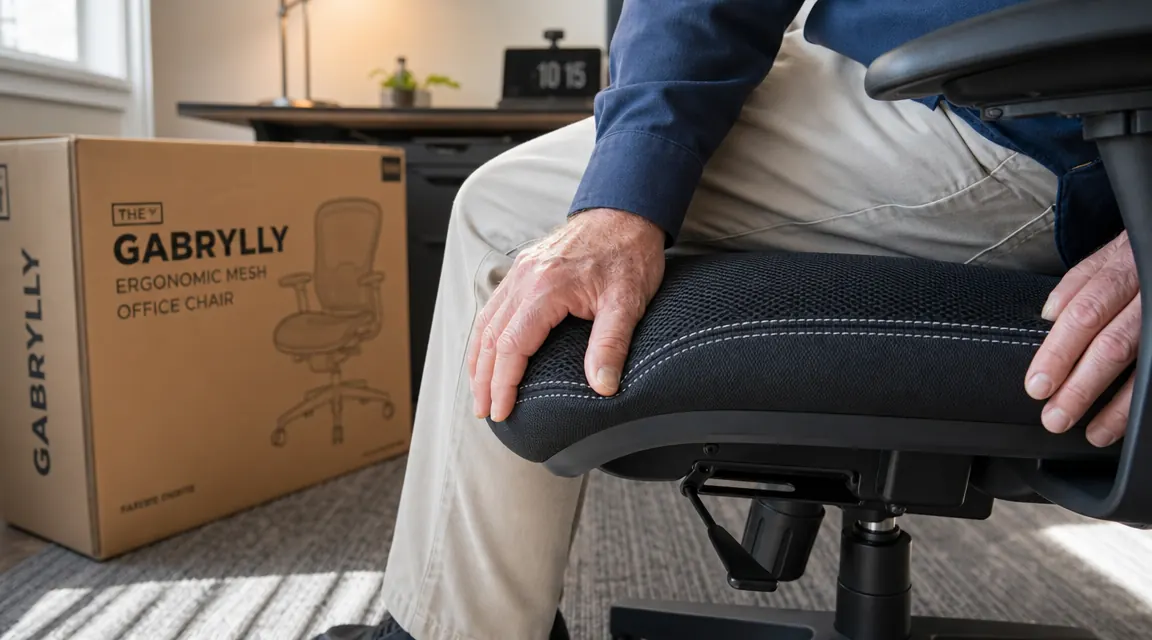
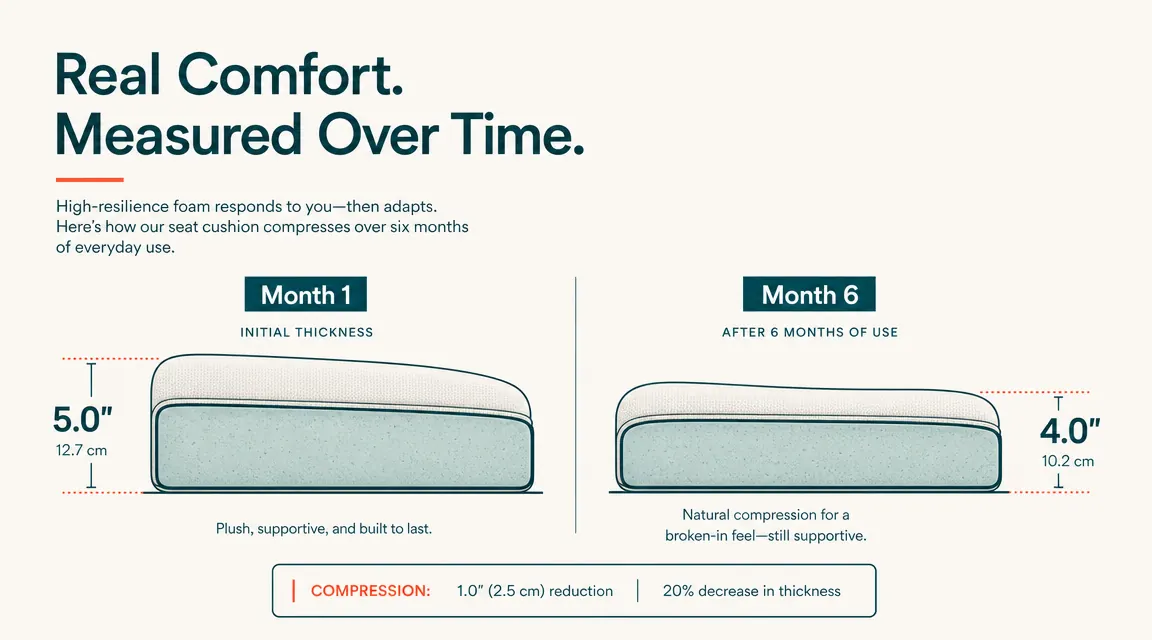
The GABRYLLY seat cushion uses high-density foam, and on day one it is firm in the way that suggests durability. Here is what happens over time: the foam compresses unevenly. The center, where most of your weight lands, softens first. The perimeter stays firmer longer. By month four or five, depending on your weight, you may notice a slight valley forming in the middle of the seat. It is not dramatic, and it is not uncomfortable. But it changes the feel of the chair, and if you are someone who bought the GABRYLLY partly because of that initial seat firmness, the evolution will register.
This is not unique to GABRYLLY. Almost every chair with a foam seat cushion in this price range does the same thing. The reason it is worth mentioning is that some buyers come from chairs with memory foam, which has a different break-in curve, and they interpret the compression as a defect rather than normal use. It is normal use. The chair is still comfortable after break-in, just softer. If you need a seat that holds its initial density for years, you are looking at chairs that cost significantly more, or at mesh seat pans, which GABRYLLY does not offer.
The Flip Arms: Honest Assessment After Real Use
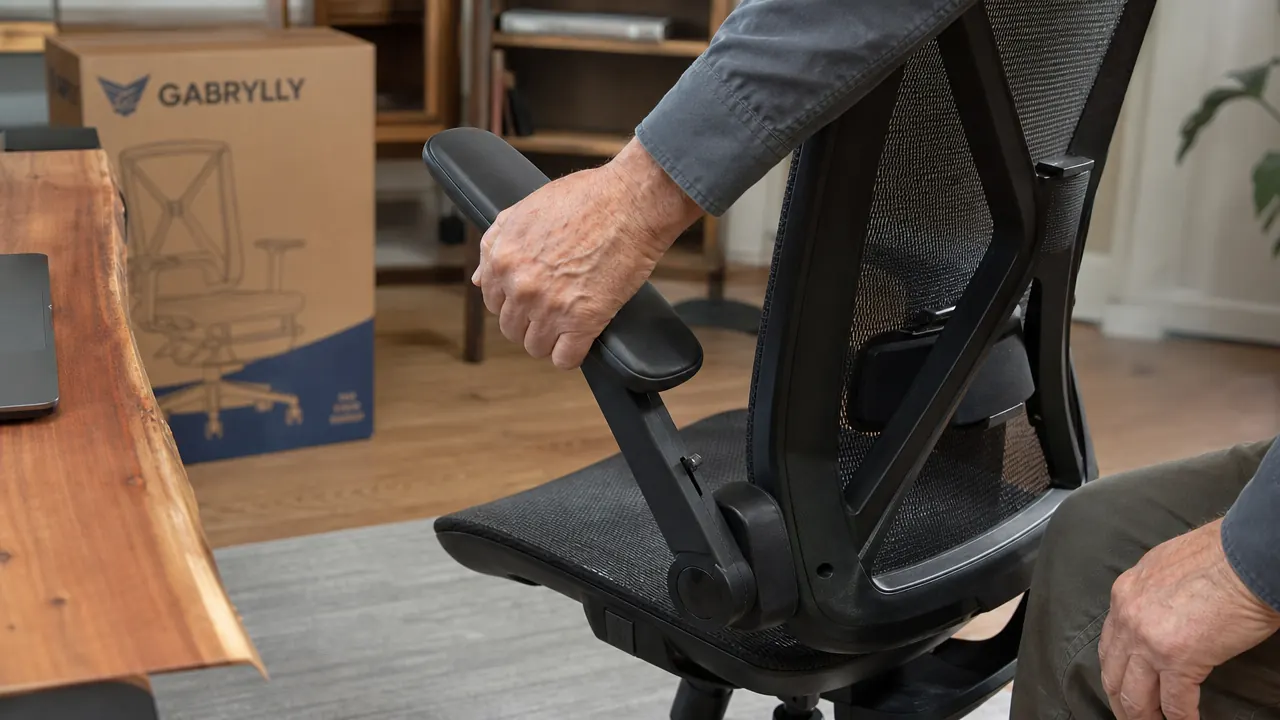
The flip-up armrests on the GABRYLLY are a standout feature on paper. The pivot lets you fold them straight up when you want to get closer to the desk, and back down when you need support. In practice, I want to give you the unvarnished version. The pivot mechanism is plastic. Not the arm pad, not the arm tube, but the actual pivot hinge is a plastic assembly. After regular use, the flip action develops a slight looseness that was not present when the chair was new. The arms still lock in the down position firmly enough for day-to-day use, but if you flip them frequently, you will notice the action becomes slightly sloppier over time.
If you use the flip feature once a day or less, this is a non-issue. The arms will likely outlast your interest in the chair. If you flip them constantly, the pivot hinge may develop a rattle or wobble within the first year. This is the kind of detail that does not show up in Amazon reviews until people have had the chair long enough to notice, and many do not write a second review. Worth knowing going in.
The arm height adjustment is separate from the flip function, done by pressing a button on the outside of the arm tube and sliding it up or down. This mechanism is more solid, with a firmer click and less play than the flip pivot. The height range is useful, roughly four inches of travel. If you work at a keyboard all day and want your elbows at 90 degrees, you will find a setting that works.
The chair did not fail me. But there were three or four things I wished I had known before the order shipped, and none of them appeared in any review I read.
The Headrest: When It Helps and When It Just Gets in the Way
The GABRYLLY headrest adjusts up and down on a post and also tilts forward and back, which gives you more positioning flexibility than a fixed headrest. Here is the honest truth: for active keyboard work, most people will not use it. When you are sitting upright and typing, the headrest either contacts the back of your head and nudges it slightly forward, or you have to adjust it far back enough that it does not make contact at all. Neither of those positions is really support.
Where the headrest earns its place is during reclined reading, video calls, or any seated task where you lean back. In those moments, having a surface to rest your head against reduces neck fatigue noticeably. I use mine almost exclusively when I am watching a recording or reading a long document. During actual desk work, I leave it tilted back so it stays out of the way.
The padding on the headrest is firm, closer to a firm pillow than a cushion. Some people find this comfortable, some find it hard. If you have neck tension that requires a soft surface, this headrest will not be it. For a neutral resting position, it does the job. The adjustment post does not loosen or shift during use, which is the main failure mode on cheap headrests. That part is solid.
The Tilt Mechanism: Where GABRYLLY Actually Earns Its Keep
If there is one area where the GABRYLLY punches above its price range, it is the tilt system. A lot of chairs in this price bracket have a tilt lock that either does not hold or holds with so much resistance that it feels like a latching a door. The GABRYLLY tilt lock is smooth, the lock position is stable, and the tilt tension knob gives you enough range to find a resistance that matches your weight. This matters more than most people realize when they are buying a chair.
Bad tilt tension means the chair either snaps you upright when you try to recline or offers so little resistance that you feel like you are falling backward. The GABRYLLY avoids both extremes. The free-float range runs from upright to about 120 degrees, and the lock engages at any point in that range. The spring tension does not fade over months of use. When I set mine at the beginning, it stayed consistent. That is the kind of mechanical reliability I look for in anything I am going to use every single day.
What I Liked
- Tilt lock is one of the better mechanisms at this price, holds without creep or noise
- Seat pan depth accommodates most adult proportions without front-edge pressure
- Headrest functions well for reclined use and does not loosen on its post
- Arm height adjustment has a solid click and useful range for keyboard work
- Lumbar knob provides real adjustment range, enough to match most lower back curves
- Mesh back stays taut with no visible sag through extended daily use
Where It Falls Short
- Wide seat places armrests too far out for average-framed users, potential shoulder tension
- Seat cushion foam compresses unevenly toward center over four to six months of daily use
- Flip-arm pivot hinge is plastic and develops slight looseness with frequent flipping
- Headrest is not useful during upright active work, primarily a reclined-use feature
- Arm width is fixed and cannot be adjusted inward to narrow shoulder stance
- No memory foam or gel layer in the seat for users who prefer that initial sink-in feel

Who This Chair Is Actually Built For
The GABRYLLY hits its target when the buyer is a larger-framed adult, somewhere between 5-foot-9 and 6-foot-2, who spends four to eight hours a day at a desk and is coming from a chair that offers no lumbar support at all. That is the upgrade gap where this chair makes the most sense. The wide seat, the decent lumbar knob, and the well-tuned tilt mechanism all serve that person well. Hybrid workers, freelancers, retirees running a side project, anyone who is not trying to match a Herman Miller but does not want to swap chairs again in six months will get good value here.
Where it is less well-suited: average or slight build where the wide seat creates arm positioning issues, users who need to flip the armrests constantly and want a pivot that holds like new indefinitely, and anyone who sits primarily upright and was counting on the headrest to do active work for them. Those are not reasons to avoid the chair, they are reasons to know what you are buying.
Who Should Skip It
Skip the GABRYLLY if you are under about 160 pounds and have narrow shoulders. The seat will feel too wide, and the arms will sit in a position that works against you during long typing sessions. Also skip it if you have a history of shoulder impingement or rotator cuff issues, because the fixed wide arm stance can exacerbate that over time. If you need a headrest that supports your neck during active keyboard work, this chair will disappoint you. The headrest is designed for reclined positions and is not particularly useful for upright focused work. Finally, if foam seat durability is your top concern and you plan to be in the chair for five-plus years at the same firmness level, consider stepping up to a chair with a mesh seat pan instead.
If the lower back pain every afternoon sounds familiar, this chair addresses the cause, not just the symptom.
The GABRYLLY ships with all hardware included, assembles in under an hour, and has over 14,000 ratings on Amazon. Check today's price and whether it is in stock before making the call.
Amazon Check Today's Price on Amazon →